Zap! A bolt of energy jolts through the current as it faces resistance, but its voltage doesn’t allow it to stop until it lights up that bulb like an idea. Electricity has been a commodity of innovation enabling new technologies to usher in an era of higher economic productivity and better societal outcomes. However, that commodity can only reach its full potential if the infrastructure is maintained and interconnected throughout society.
MERALCO has been a longstanding institution with a rich and vibrant history. However, did you know that the company has provided railway systems from its inception? One can argue that the spark of Manila’s Modernization may have been due to its developments in the railway system. Follow the current to see the story of the inception of MERALCO.
Power Plants and Horses.
Believe it or not, the infrastructure for electricity had existed as far back as the late 1800s with two Spanish-owned utility providers taking charge. The first company was the Compañia La Electricista which was the original provider of electricity to the city of Manila. It was established in the year 1892 by Sociedad Mercantil Millat, Marti y Mitjans, Jose Moreno Lacalle, and the Compania de Tabacos de Filipinas. The original concession of the company was to provide lighting, through oil lamps, to the streets with a 20-year contract. It even allowed the company to establish private contracts with homeowners and establishments to be lit with these lamps.
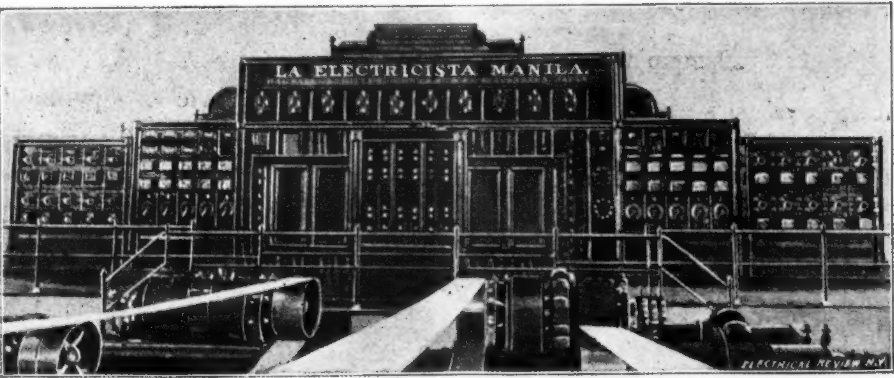
Switchboard in the Central Station (1899).
The second company, the mass transport provider Compañia de la Tranvía de Filipinas can be considered as one of the pioneering companies in land transit. Its establishment can be traced to 1882 by Jacobo Zobel (of the Ayala-Zobel family) and Aldredo Bayo. The first tranvìas were horse-drawn passenger carriages running through tracks built around the Manila suburbs.
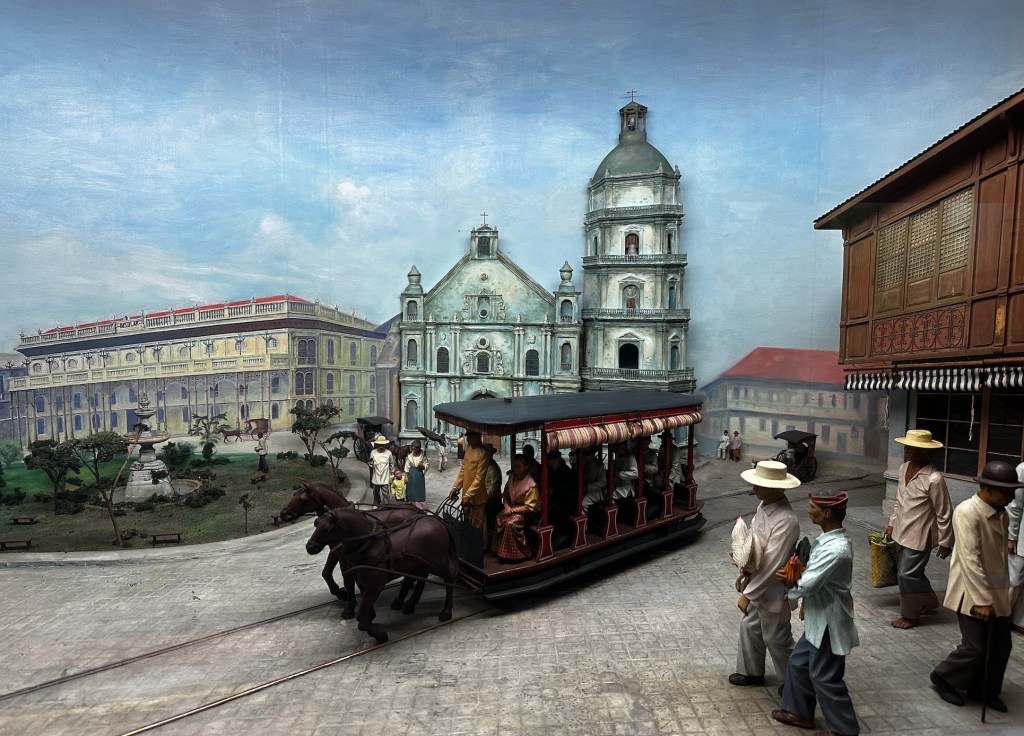
A Tranvía in Manila (2023).
The seemingly monopolistic enterprise of these companies makes it sound profitable, however, there were significant risks and issues in terms of operationalization, business nature, and geopolitics. During the Industrial Revolution, Spanish colonizers lagged behind other nations and needed to upgrade infrastructure to fit the standard at the time leaving what was available as obsolete. They also needed to make more effort to harmonize these utility services to sustain their business. La Electricista, for example, could not sustain itself on lighting alone as its service was primarily during the evening. If the Spanish had invested in electric trains and merged the electric systems, the dependency on La Electricista may have been around the clock bolstering its position in society. Moreover, the outbreak of the Philippine-American war in 1899 would see the usage of service and profit margins for these two companies suffer.
Swift Bidding.
It was only until the quelling of the war that the new American colonizers started to rework the electric system. America’s imperialistic venture saw the potential of the Philippines as the face of the Orient by connecting the economies of the Chinese and Japanese.
Manila as the capital was a vast area and faced transportation issues as the 221,000 Manileños relied on these inefficient tranvías. These vehicles would only go as fast as the horses would take it and the construction of these vehicles was poorly made. The inconvenience and expenses contributed to the hindrance of the city’s growth. Policymakers agreed that the most astute way to solve the transportation issue was to modernize Manila’s electric plants and railways. The ambitiousness of the solution begged the question, who was bold enough to fund this?

Topographical Map of the City of Manila (1903).
The challenge to modernize Manila’s transit and power system was left to the Philippine Commission (now the Philippine Legislature consisting of the House of Representatives and the Senate). On October 19, 1902, they passed Act No. 484;the act dictated that the Commission would provide two franchises to construct an electric street railway in Manila and its suburbs and the other to construct, maintain, and operate an electric light, heat, and power system. Competitive bidding would take place upon passing of the act and would last until March 4, 1903.
- The franchise was valid for a period of 50 years. After 25 years from awarding, the grantee was allowed to sell all of the company’s assets to the city of Manila, based on the financial results of its operation.
- In order to participate, each bidder was required to deposit 75,000 USD as evidence of good faith whether in cash or in check. Upon awarding the franchise, an additional 175,000 USD was to be deposited to lock in the franchise.
- The grantee was tasked to initiate construction of all infrastructure stipulated within six months of receiving the franchise and must be completed twenty months after the expiration of the six-month period.
- Upon operation, the grantee was supposed to pay 2.5% of its gross earnings to the Treasurer of the Philippines.
Advertisements for competitive bidding were frequently communicated through newspaper publications in Manila, New York, Chicago, and even Washington. Americans and Filipinos were called together to make their bids. Shockingly, only one bid for the franchise and won it by default on March 24, 1903. Charles Swift led the bid and was syndicated alongside construction companies and metal magnates including J.G. White and Co., Frank Buhl, Peter Kimberly, and George Smith.

Electric Railway to be built at Manila (1903).
Swift had been leading a legal practice in Detroit, Michigan. It was also there that he would be a leader in the development of the railways with the creation of the Rapid Railway and the Detroit & Port Huron Shore Railway which developed his acumen for the railway business. His bid signified the great risk that he was willing to assume the significant amount of capital he was willing to invest, especially since the Philippines was still in its development stage of modernization.
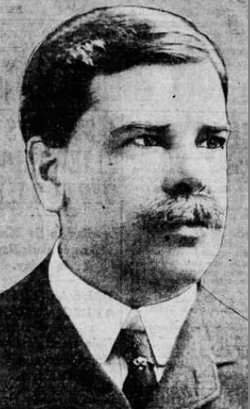
Charles May Swift (2023).
Swift’s first order of business was to work steadily to achieve the highest operation efficiency. The imperative was to replace the obsolete technology that the Spanish left behind with the replacement of the service of the old La Electricista with up-to-date service from the new steam turbo-electric plant. The first batch of engineers also arrived and began working and surveying the streets of Manila. This was in preparation for the construction of the modern electric railroad, electric light, and power systems that the West had been using. Tink! The spark of Manila’s modernization has started to travel through the railed wires to light the bulb and it would see another scientific revolution bringing it to the standards of a global city.
Financing (if you’re interested).
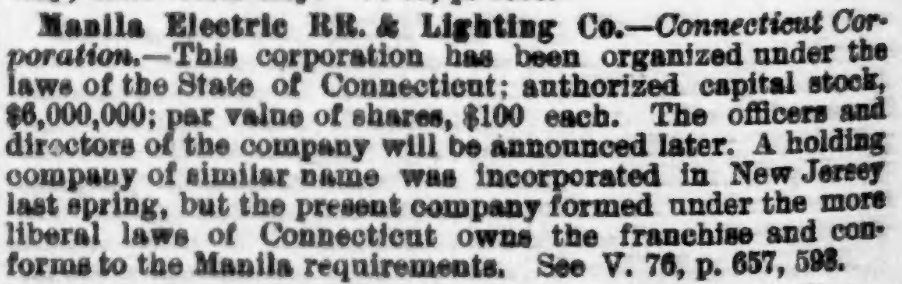
Manila Electric RR. & Lighting Co. (1903)
The company would be officially chartered on June 26, 1903, under the laws of the states of Connecticut and New Jersey. Its initial outstanding capital obligations would be equivalent to 5,685,000 USD with the structure as follows:
- First Mortgage 6% 50-year gold bonds – 3,000,000 USD
- 6% 50-year notes – 1,000,000 USD
- Common Equity – 1,685,000 USD
Swift had also been on a buying spree to make up the initial assets of the company. At the end of it, Swift’s purchases had a makeup of 100% ownership of Compania de la Tranvía, 98% of La Electricista, and other companies.
Me.
The commodity for innovation has never been as scarce during the writing of this article. The year 2023 saw a plethora of news on the energy sector. The Philippine government has warned that supply issues of the commodity are expected moving forward and that power likely would be more likely. Just this May 2023, a five-hour power outage was experienced in the Philippines causing a loss of economic activity worth PHP 556M.
In addition, the transport crisis today still echoes the inefficiencies of the recent past. The stubborn crisis robs the current and future generation of a brighter future. The right to education is trampled upon when students, robbed of sleep, arrive in class drowsy, minds clouded by the pollution. Going to work already seems like an odyssey with the overwhelming amount of cars trapping you in what seems like a metallic eternity. What more if one heads home?
This is my call to action to echo the spirit of Charles Swift who dared to invest in the electric and railway infrastructure transforming Manila into a global city. Just as Swift illuminated the streets of Manila, the Philippine government must now do the same to lead us to a brighter future. Just as Swift moved Manila, the Philippine government must move to address this transport crisis. It is the only way to bring back the spark of modernization.
 kita.
kita. 