A great infrastructure project is defined by the long-term benefits associated with its planning, especially when the investment takes an extended time to complete. Large-scale endeavors need to be planned and initiated with the associated financial capital to create a clear picture of what the nation would look like with it. Bonifacio Global City (BGC), located in Taguig City, is the zenith of modern Philippine infrastructure investment between the public and private sectors. Touted as the city of the 21st century in 1995, the project was valued at a total of $7.3M (nominally equivalent to $15M today). Today, BGC stands as a vibrant hub among the country’s most influential business centers, offering vast opportunities within its growing landscape.
McKinley’s Root.
Flashback to the 1900s, initially a military installation, BGC was then known as Fort McKinley established in 1901 in response to the Philippine-American War. Named after then-U.S. President William McKinley, the fort was a beacon of American policy on “Benevolent Assimilation” of the nation. Elihu Root, an American Republican, approved the establishment of the fort to transfer military personnel from the famed Fort Santiago. The original size of the fort was approximately 32 square kilometers with construction and development led by the American Army Corp of Engineers.
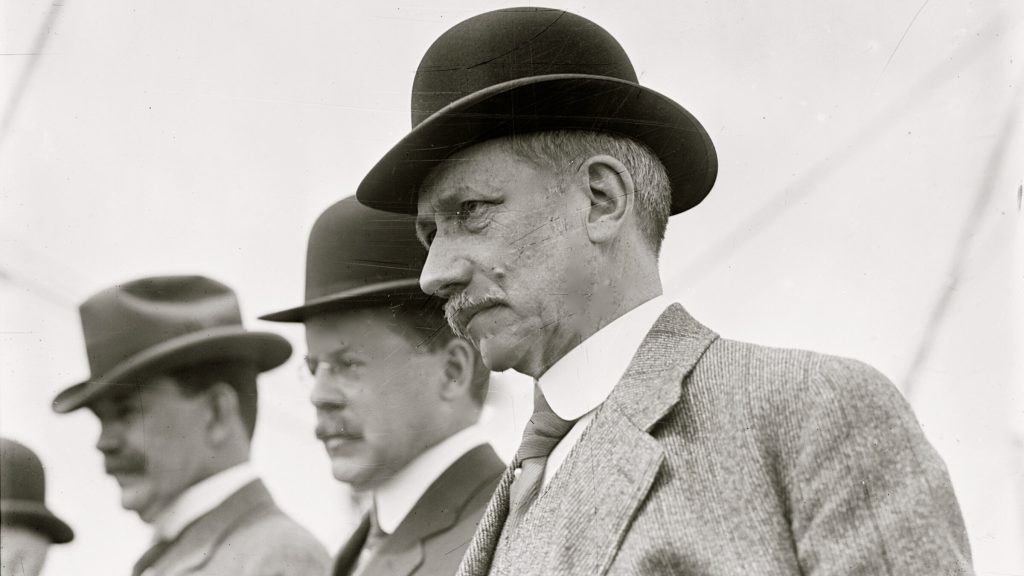
Elihu Root (Balls and Strikes, 2023)
Over time, the fort’s area grew as American presence slowly integrated with the Filipinos. Most buildings had a parade ground where cavalry and riflemen would conduct formations and marches. Housing, sporting venues, and various club headquarters were established for personnel. The fort was also known for its medical capabilities with the establishment of the Sternberg General Hospital, known for its tropical diseases department. The modernized area attracted locals, however American personnel thought of the reserve as an independent nation meaning no Filipino could enter without a corresponding passport. The Filipinos, even those serving in the military, were considered foreigners in their own country. Fort McKinley was seen to be anti-Filipino as segregation policies were enacted.

Fort McKinley (Fort Bonifacio) Quartermaster Compound, Taguig, Metro Manila, Philippines (John Tewell, 1931)
Between 1920 and 1930, the fort began to struggle as U.S. Congress failed to find the liquidity to fund due to the Great Depression. The period was a lull leaving the area with outdated buildings and technology. The fort was revitalized by the 1940s as Japanese aggression became apparent. Fort McKinley played a key role as General Douglas MacArthur was called to service to bolster the island’s defenses. It provided much-needed medical and signal school to support the Philippine Commonwealth Army and the United States Army Forces in the Far East (USAFFE)
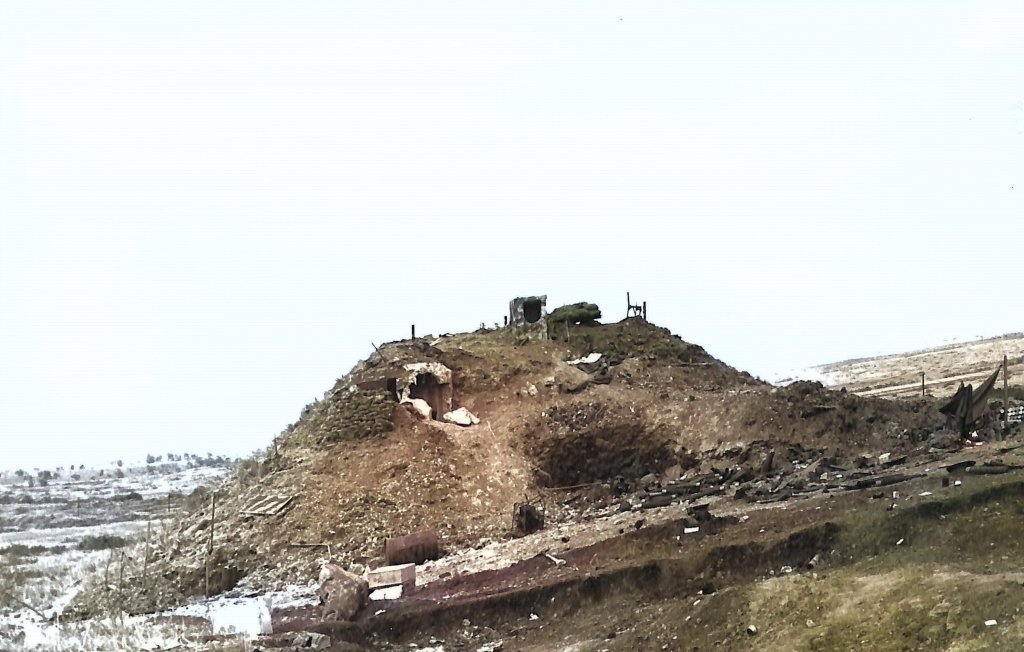
The remains of a three story Japanese command bunker at Fort McKinley after it was secured by the Americans (US National Archives, 1945)
Given the military importance of the vicinity, the fort was a constant target during Japanese bombing missions. The war saw the fort severely damaged by these airstrikes as its defenders began shifting to Bataan as they were being overrun. Soon the tides of war would change as the Americans and their allies took back the city of Manila in 1945. With the nation’s liberation, questions soon arose about what would happen to Fort McKinley.
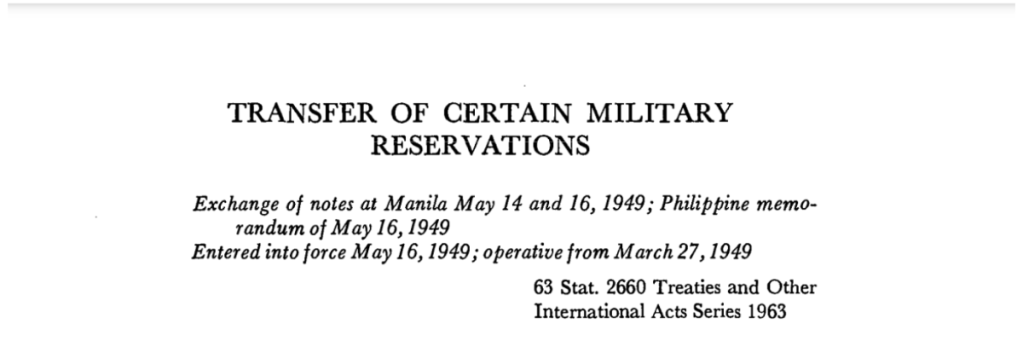
Official Header transferring Military Bases to the Philippine Government (Charles Bevans, 1949)
When the nation gained independence on July 4, 1946, a significant political dilemma arose regarding the true meaning of sovereignty. Although the Americans allowed the Filipinos to govern themselves, the continued military presence at Fort McKinley and other bases left a lingering sense of resentment, as it felt more like a protectorate. Legislation passed on March 4, 1947, authorized the ongoing presence of American forces, aiming to benefit both nations by ensuring stability in the post-war period. While Fort McKinley was soon relinquished to the Philippine government on May 1949, military bases in other parts of the islands still were within American control as part of the agreement.
Bonifacio’s Bidding.
Flashforward to the 1990s, the Philippines was reeling from a Marcos autocracy, lack of economic opportunity, and further discontent towards American bases. In September 1991, the Philippine Senate made a bold decision to reject a 10-year extension of the lease agreements for U.S. bases, most of which were located in Central Luzon. With the departure of the Americans, the question arose: how could the government transform these military sites into productive civilian spaces, while also securing the necessary funds?
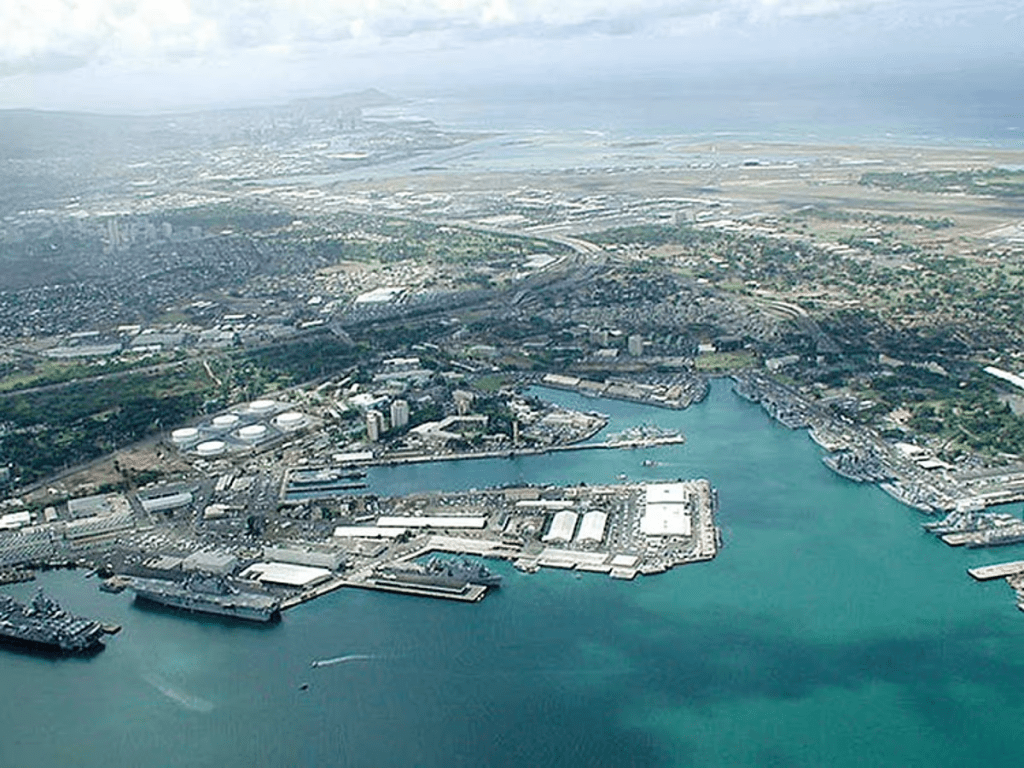
Subic Bay Military Depot (Gulf News, 1992)
Facing limited financial resources, the Philippine government turned to one major solution—privatization. Among the prime assets up for sale was Fort Bonifacio, the sprawling 6.4 million square meters of land that had once housed the U.S. military’s operations. Recognizing its potential, President Corazon Aquino took a bold step in 1992, signing into law the Bases Conversion and Development Act. This established the Bases Conversion and Development Authority (BCDA) to spearhead the project and facilitate the sale of Fort Bonifacio, which would raise crucial capital to fund the development of Central Luzon. The sale of Fort Bonifacio, Manila’s largest privatization project to date, was poised to raise 50% of the needed funds for the region’s transformation.
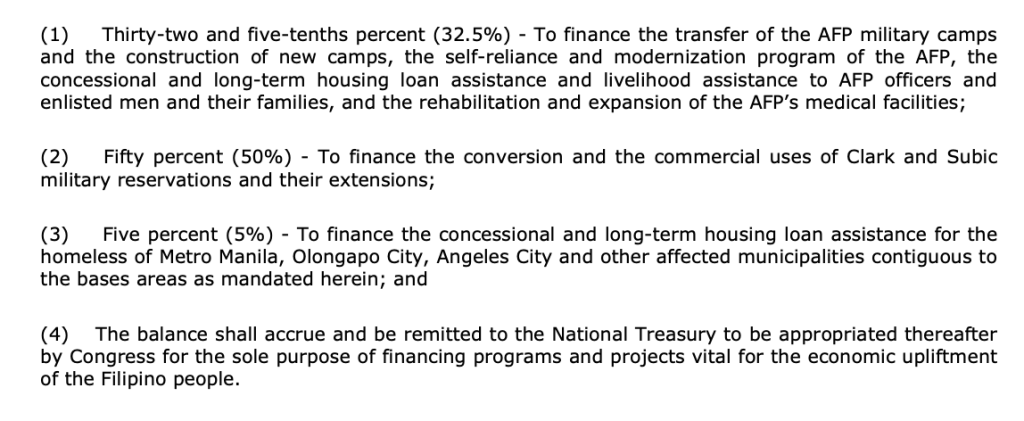
Use of proceeds from Fort Bonifacio’s sale (Bases Conversion and Development Authority, 1992)
By 1994, to ensure private sector involvement, President Fidel Ramos launched a public bidding process for the Fort Bonifacio development. The winning bidder would partner with the BCDA to undertake a joint venture and gain control of about 4.4 million square meters of prime real estate. The competition was fierce, with five major players vying for control—Ayala Land, Metro Pacific Corp., the Salim Group, JG Summit Fil-Estate, and the AFP-RSBS.

Fort Bonifacio (Zipporah Antonio, 2014)
For nearly six months, the bidding war intensified, with Ayala Land, backed by an international group of partners including Pidemco Land, Straits Steamship Land, and Marco Polo Development, positioned as the favorites. Their successful track record with the Makati business district made them seem like the obvious choice, especially with their bid of $1.2 billion. Yet, in an unexpected twist, Metro Pacific Corp. triumphed, outbidding their competitors with a staggering $1.6 billion offer. This bold bid sent a powerful message about the intrinsic value of the project and signaled a shift in the nation’s economic future—a modern Philippines poised for growth and prosperity.
The deal was a game-changer. Metro Pacific partnered with BCDA and brought in the expertise of Bovis Asia Pacific Pte. Ltd., a renowned British urban planning firm, to design a visionary 20-year development plan. The projected cost of transforming Fort Bonifacio into a vibrant, modern city was $7.3 billion, with aspirations of creating the “city of the 21st century.”

Fort Bonifacio (Unknown, 2001)
The sale of Fort Bonifacio didn’t just spark the development of one property—it catalyzed the revitalization of an entire region. The proceeds from the sale helped fund the transformation of Central Luzon, attracting $1.2 billion in investments from 172 foreign and local companies. Subic Bay Freeport and the Clark Economic Zone, two of the Philippines’ most important economic hubs, were born from this initiative, generating nearly 60,000 jobs in the region and reshaping the nation’s economic landscape.
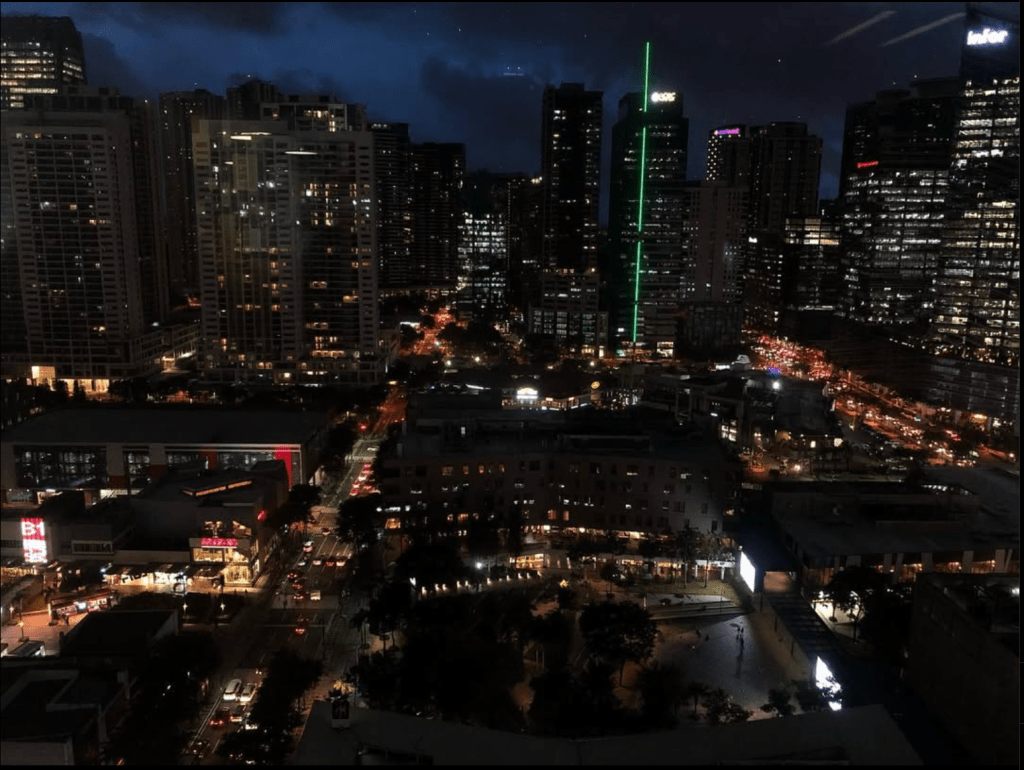
Central Square and High Street (Raphael Canillas, 2019)
What began as a bold effort to reimagine former military bases became a model for national transformation. Fort Bonifacio’s marked the beginning of a new era for the Philippines as it positioned itself as a competitive player on the global stage, with a modern, thriving economic future.
Me.
An intricate relationship exists between infrastructure projects and long-term national development, using Bonifacio Global City (BGC) as a compelling case study. Its transformation from a military base into a thriving urban hub exemplifies how strategic planning, coupled with significant investments, can create lasting impact for a nation’s economic and social fabric.
As someone who worked in its vicinity, I was jaded to its history without even realizing the significant impact this city had on another one hundreds of kilometers away. Research made me see that we as Filipinos are capable of reimagining and manifesting the future. This was merely about building infrastructure but a catalyst for bringing the nation to a new age.
Personally, I wish that there were more Filipino architectural sites within Fort Bonifacio, but at least great local companies made the city possible. LOL.
 kita.
kita. 